If you've been wondering whether Genshin Impact counts as an MMORPG, the short version is pretty simple: it doesn't. The mix-up makes sense, though. Genshin is always online, gets regular live-service updates, supports cross-platform co-op, and keeps expanding Teyvat with huge new regions that can feel a lot like MMO zones. But in 2026, deep into the Version 6.x cycle, it still isn't an MMO in the traditional sense. It’s much closer to a solo-first online action RPG with optional multiplayer on the side.
Is Genshin Impact an MMORPG?
No — Genshin Impact is not an MMORPG. The better label is online action RPG, or if you want to be more specific, a live-service open-world gacha RPG with co-op features. That distinction matters, because it sets the right expectations before you jump in.
A lot of players ask is genshin impact an mmorpg because, on the surface, it checks a few familiar boxes. It’s always online, it needs server connectivity, it gets frequent patches, and its world keeps growing across Teyvat — from Mondstadt and Liyue all the way to Natlan and the newer Nod-Krai area added in Version 6.x. Those are definitely traits people associate with games like World of Warcraft or Final Fantasy XIV.
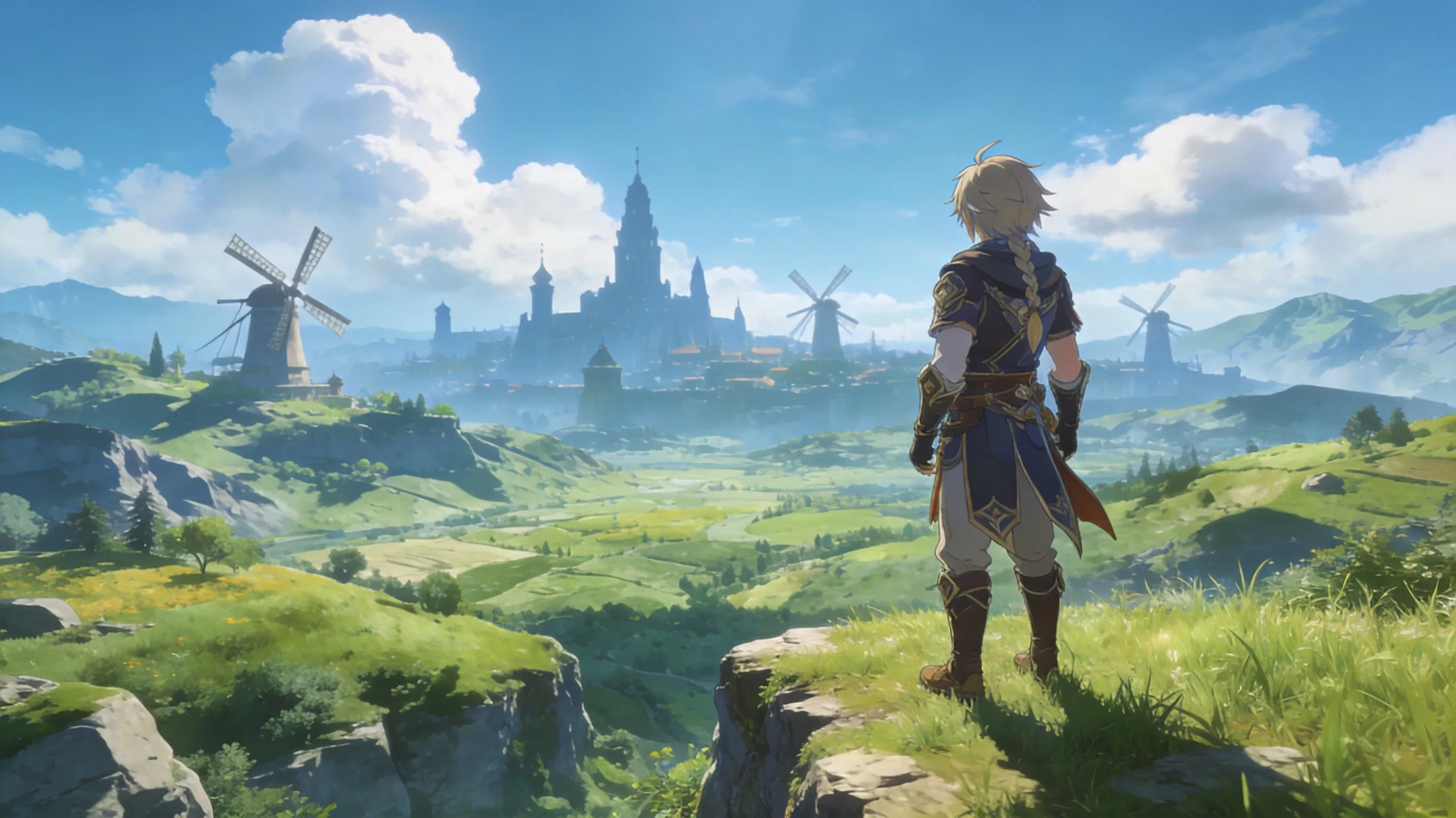
The thing is, MMORPGs are defined by more than just being online and big. A true MMORPG usually has a persistent shared world with hundreds or even thousands of players in the same space, structured social systems, class-based role design, player economies with trading, and larger group content like raids or guild progression. Genshin simply doesn't have those foundations.
| MMORPG Criteria | Genshin Impact |
|---|---|
| Persistent shared world (1,000+ players) | No — instanced per player world |
| Class trinity roles | No — flexible elemental team comps |
| Player-to-player trading | No — no open economy |
| Raids / guild content | No — no guild system |
| Shared social hub spaces | No — no player-populated town squares |
| Co-op multiplayer | Yes — up to 4 players |
| Always-online requirement | Yes |
| Live-service update cadence | Yes |
Genshin Impact Multiplayer Features
Genshin does have real multiplayer, but it's very clearly built as a bonus feature rather than the core experience. Co-op unlocks at Adventure Rank 16, which usually takes around five to ten hours if you're pushing through the early Archon Quest content. Before that point, you're playing entirely solo.
Once co-op opens up, you can play with up to four players in one world. That cap has stayed the same since launch back in September 2020. There’s also no true random matchmaking for general open-world play. Co-op is handled through invites using the in-game friends list and each player’s UID. On the platform side, HoYoverse supports full cross-play across PC, PlayStation 4, PlayStation 5, Xbox Series X|S, iOS, and Android, plus cross-save through a HoYoverse account, which makes swapping devices pretty painless.
One restriction that catches people off guard is the same-server rule. Genshin runs on four regional servers: America, Europe, Asia, and TW/HK/MO. You can only co-op with players on the same server you picked when the account was created. There’s no cross-server play, and you can’t retroactively change that choice.
Co-op Activities
In co-op, everything happens inside the host player's world. Guests can help with domains, elite bosses, and open-world exploration. Domains are usually where co-op feels most useful, since every player gets their own rewards as long as they spend their own resin. In practice, that makes artifact and talent material farming feel faster and less repetitive.
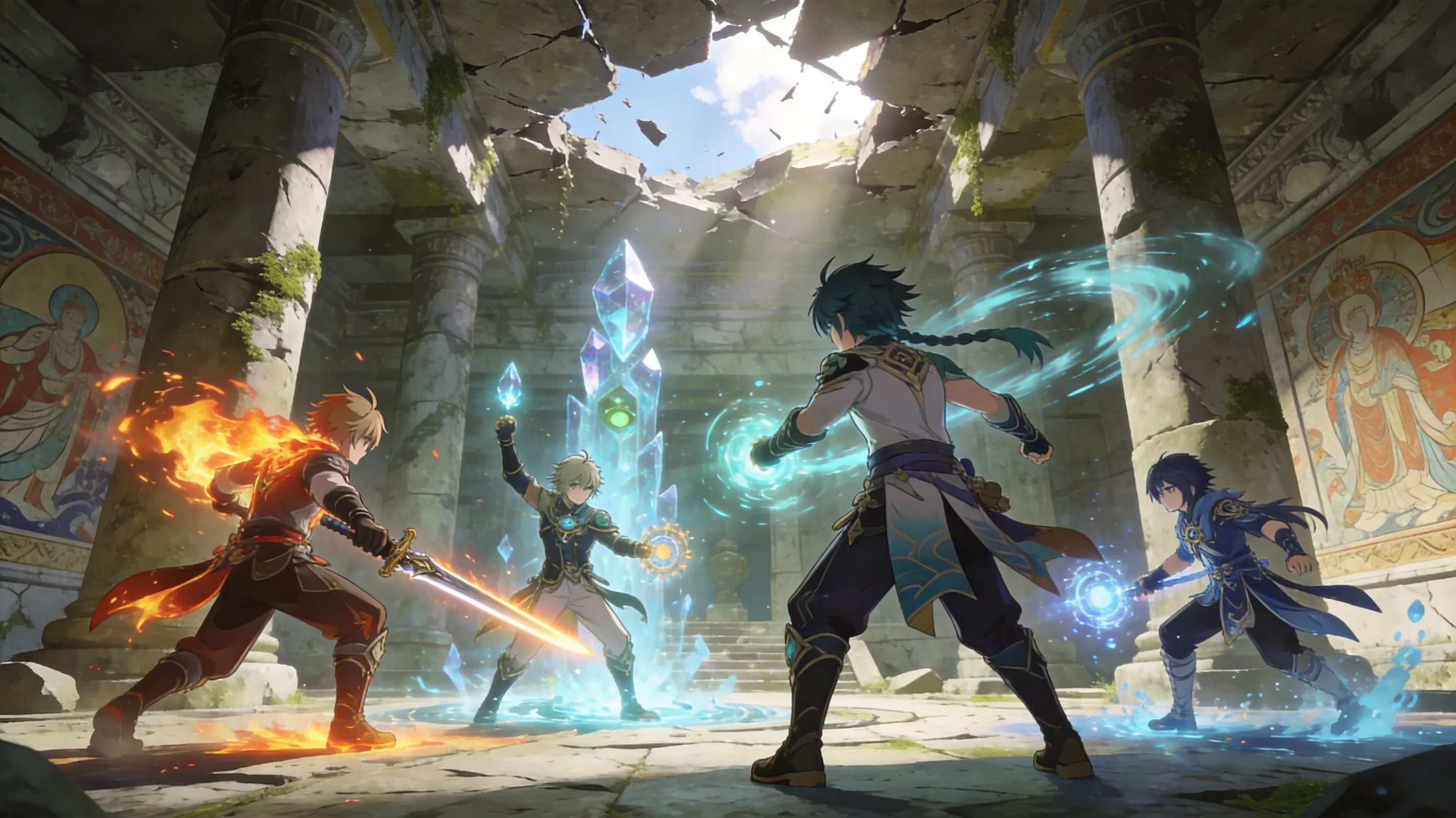
Some limited-time events have also added dedicated co-op combat modes over the years. Those are fun when they show up, but they’re not the standard format. They tend to be self-contained, and they don’t change the fact that most of Genshin is still built around solo progression. The host’s world state also controls what can be done, so guests can’t freely trigger world quests, open untouched chests, or solve progression-locked puzzles the host hasn’t already unlocked.
Solo-Locked Content
A big chunk of Genshin’s most important content stays locked to solo play. Archon Quests, which drive the main story across each nation, are single-player only. Character Story Quests are also solo, which makes sense given how heavily they lean on dialogue and scripted sequences.
Then there’s Spiral Abyss, which is still the game’s main endgame challenge and the closest thing Genshin has to a performance benchmark. That mode is entirely solo. Your floor clears, star count, and the biweekly Abyss cycle are all personal progression. You can’t bring co-op partners into it, and that alone separates Genshin pretty hard from raid-focused MMOs.
Genshin Impact vs MMORPG Features
This is where the difference becomes really obvious. Genshin does not have a persistent shared world in the MMO sense. Every player gets their own instanced version of Teyvat. When you log in, you’re alone unless you invite someone in. You won’t see random players running around Mondstadt, hanging out in Liyue Harbor, or forming groups in real time the way you would in Elder Scrolls Online or Black Desert Online.
It also has no raids. Four players is the maximum, and there’s no large-scale encounter design built around multiple coordinated parties. On top of that, there are no guilds, clans, or built-in social progression systems. If you're coming from an MMO background, that missing social layer is a massive difference.
Trading is another clear dividing line. Genshin has no player-to-player trading, no auction house, no market board, and no player-driven economy at all. That’s not an oversight — it’s part of the game’s structure. HoYoverse makes its money through banners for characters and weapons, not through systems that let players circulate gear or resources between each other.
Role design works differently too. There’s no real class trinity here. You don’t queue as a tank, healer, or DPS in the MMO sense. Genshin characters do fall into familiar functional categories like main DPS, sub-DPS, support, or healer, but those roles are flexible and team-dependent rather than locked by class identity. Furina is a great example: depending on build and team setup, she can amplify damage and provide healing at the same time. Combat is driven more by elemental reactions — Vaporize, Melt, Hyperbloom, Aggravate, and the newer Lunar-Crystallize mechanic from Version 6.0 — than by fixed role execution.
And just as important, there’s no shared hub space. Genshin doesn’t have a Limsa Lominsa, an Orgrimmar, or any equivalent server-wide social center where players gather, recruit, trade, and just exist together.
Genre Comparison Table
| Feature | Genshin Impact | World of Warcraft | Final Fantasy XIV | Tower of Fantasy |
|---|---|---|---|---|
| Max co-op players | 4 | 40 (raids) | 24 (alliance raids) | 4–9 (varies) |
| Shared persistent world | No (instanced) | Yes | Yes | Yes (open world) |
| Guild system | No | Yes | Yes (Free Companies) | Yes |
| Player trading | No | Yes (Auction House) | Yes (Market Board) | Limited |
| Class trinity | No | Yes | Yes (Jobs) | Partial |
| Monthly subscription | No (F2P) | Yes ($15/mo) | Yes ($13/mo) | No (F2P) |
| Gacha monetization | Yes | No | No | Yes |
| Solo-first design | Yes | No | Partially | No |
Tower of Fantasy gets compared to Genshin all the time, but it’s actually much closer to an MMO-lite setup because of its shared servers and visible player population. Even then, a lot of players still wouldn’t call it a full MMORPG. Genshin sits even further away from that label.
What Genre Genshin Impact Actually Fits
The most accurate way to describe Genshin Impact is an open-world gacha action RPG with live-service structure and solo-first design. HoYoverse has never really positioned it as an MMORPG, and honestly, the game’s design makes that pretty clear. The focus is on your own journey through Teyvat — your quests, your roster, your exploration, your progression.
The live-service side is absolutely real, though. Genshin runs on a steady biweekly patch cycle, adds major new regions that can feel almost expansion-like in scale, and keeps a rotating event schedule going year-round. By the Version 6.x era in 2026, the map has grown far beyond early Mondstadt and Liyue, now covering Inazuma, Sumeru, Fontaine, Natlan, and the Slavic-inspired Nod-Krai region. Each one adds dozens of hours of quests, exploration, puzzles, and side content, most of which is meant to be experienced alone.
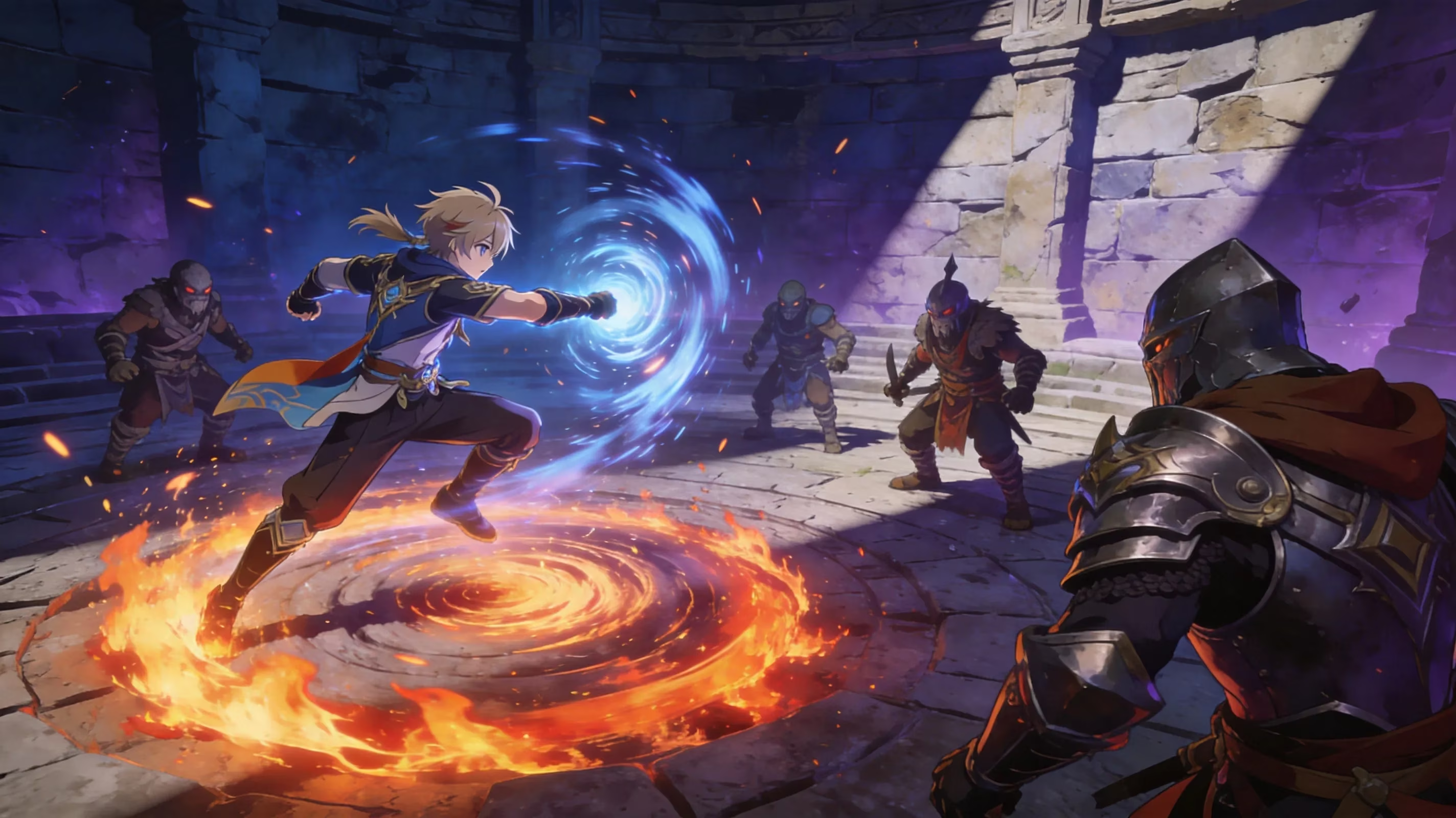
Then there’s the gacha system, which funds that ongoing content without a subscription. Characters come through the Wish banner system, with pity guaranteeing a five-star at 90 pulls and a 50% chance that it’s the featured promotional unit. That monetization model sits alongside the gameplay rather than replacing it. You can still clear the story and most endgame content on a free-to-play account if you build smart and manage resources well.
So if you want the cleanest label, Genshin is best understood as an MMO-lite in a very limited sense, not a real MMORPG. It has the online infrastructure, the patch cadence, and the cross-platform support of a modern online game. But the actual moment-to-moment experience — doing Archon Quests in Nod-Krai, clearing Seelie puzzles, or tightening your elemental rotations for Spiral Abyss — is built around one player first and foremost.
Should MMO Players Try Genshin Impact?
If you're coming from a traditional MMO, Genshin can still be a really good fit — just not for the reasons you might expect. It works best for players who enjoy story-driven exploration, like building characters around synergy and optimization, and don’t need a constant shared social space to stay engaged. If you already enjoy action RPG combat, there’s a lot here to dig into, especially once you start dealing with dodge timing, Burst windows, and the tighter rotation demands of Spiral Abyss Floor 12.
On the other hand, some MMO players are going to bounce off it fast. If what you love most is guild coordination, large-scale PvP, economy play, raid progression, or just hanging around in a busy shared world, Genshin is probably going to feel lacking. Those systems aren’t underdeveloped — they just aren’t really there.
The endgame reality in 2026 is also worth being honest about. Genshin’s long-term challenge loop revolves around the biweekly Spiral Abyss reset and the Imaginarium Theater mode added in more recent versions. Both are solo. Both reward broad roster development and efficient builds. Imaginarium Theater especially pushes players to invest horizontally instead of pouring everything into a tiny handful of five-star carries. If you’re used to MMO endgame being built around raid nights and group progression schedules, Genshin’s solo optimization loop may feel a lot thinner.
If you want something that actually scratches the MMORPG itch in 2026, there are stronger options. Final Fantasy XIV is still one of the clearest benchmarks for story-heavy MMO design with a subscription model. Guild Wars 2 remains a strong buy-to-play choice with excellent horizontal progression. Elder Scrolls Online is moving into a new seasons model in 2026. And Project Gorgon has carved out a niche with players who miss older-school sandbox MMO systems, especially after New World's cancellation.
Conclusion
So, is genshin impact an mmorpg? No — and pretty decisively so. Genshin Impact is a solo-first online action RPG with live-service support, optional four-player co-op, and gacha monetization. What it does not have is the shared persistent world, class structure, player economy, or large-scale group systems that define the MMORPG genre.
The best way to approach Genshin is to treat solo play as the main course and co-op as a useful extra for farming domains and bosses. The Archon Quest story, regional exploration, and Spiral Abyss progression are all designed around your own account and your own pace. If you go in expecting a standard MMO, it’s going to feel off. If you meet it on its own terms, though, you’ll find a seriously polished and content-rich live-service action RPG that still holds up extremely well in 2026.